Breaking Down Composting
Fall 2025
People need beginner-friendly education about composting, but unfeasible and overwhelming content makes this difficult. Accessible educational resources about composting will help people become more comfortable with composting and how it mitigates food waste.
Breaking Down Composting is an infographic print project that simplifies the composting process for beginners.
Project Details
This project was a collaboration with my classmate Katy Saylor, together we researched food waste statistics, the impacts of composting, and the barriers that prevent people from composting their food waste.
We interviewed Queen City Commons, an organization that provides food scrap collection services to residents and businesses in Cincinnati and partners with local farms and gardens to turn their collected food scrap into compost. Our biggest takeaway from our interview and secondary research was how the cycle of composting relies on everybody.
Julia from Queen City Commons

“People may not think composting applies to them, but everybody eats, and everybody creates food scraps. Composting educational efforts could focus on how composting relies on everyone.
People tend to be interested in what happens to their food scraps after they’re collected - how it directly impacts the farmers and community gardens Queen City Commons partners with.”
Problem & Project
Problem Space
Waste
Problem Frame
Many people could benefit from composting their food waste, but a lack of accessible educational resources prevents them from doing so.
Problem Statement
People need beginner-friendly education about composting, but unfeasible and overwhelming content makes this difficult.
Problem Definition
“Breaking Down Composting” is an infographic print project that simplifies composting for beginners.
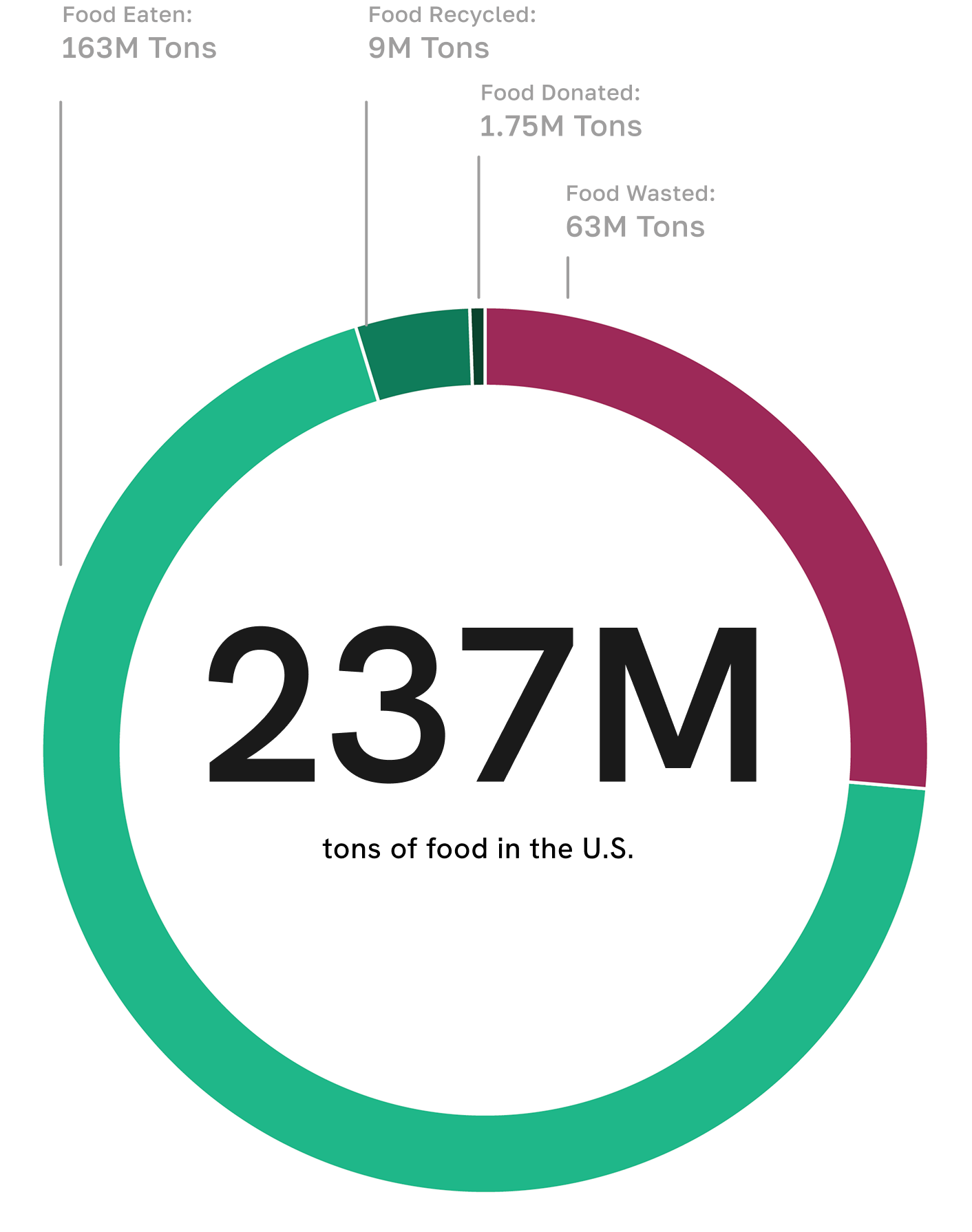
Intended Outcomes
Immediate Outcomes:
People will be more familiar and comfortable with composting.
Intermediate Outcomes:
People will feel be more conscious of their food waste and begin sorting their compost.
Ultimate Outcomes:
People will get involved in composting whether on their own at home, or dropping off food scraps to composting services.
Research
Our Audience
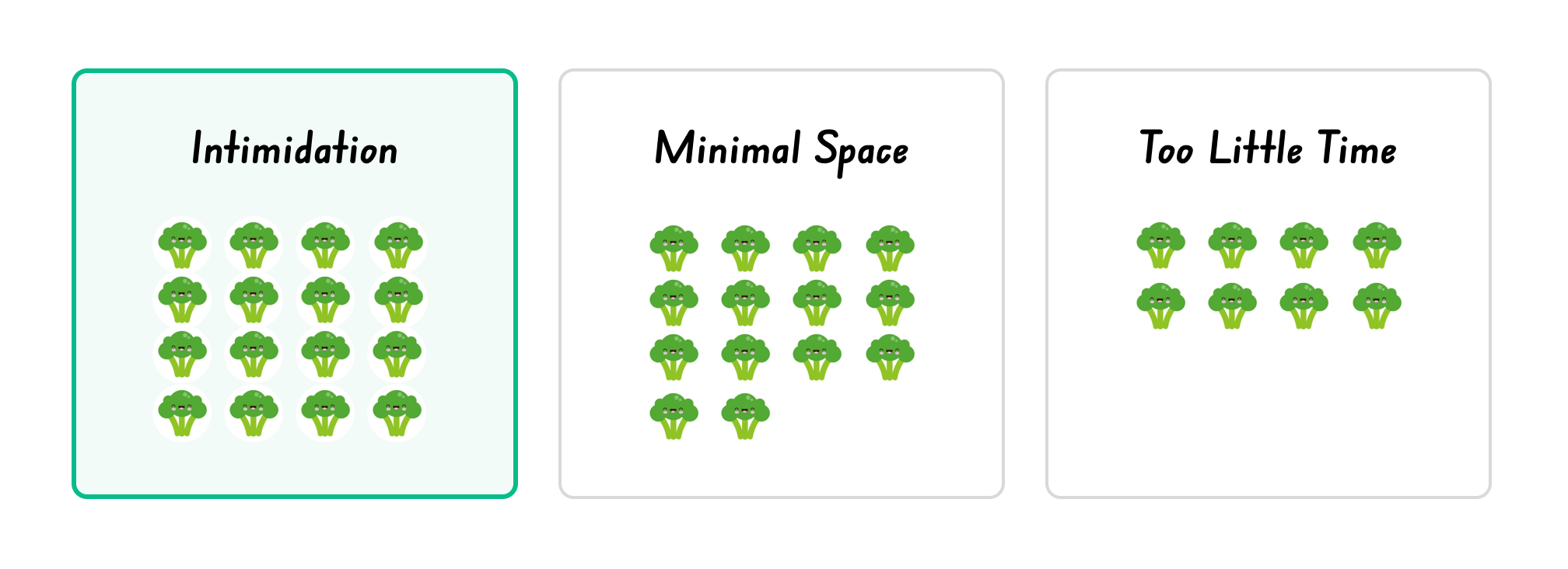
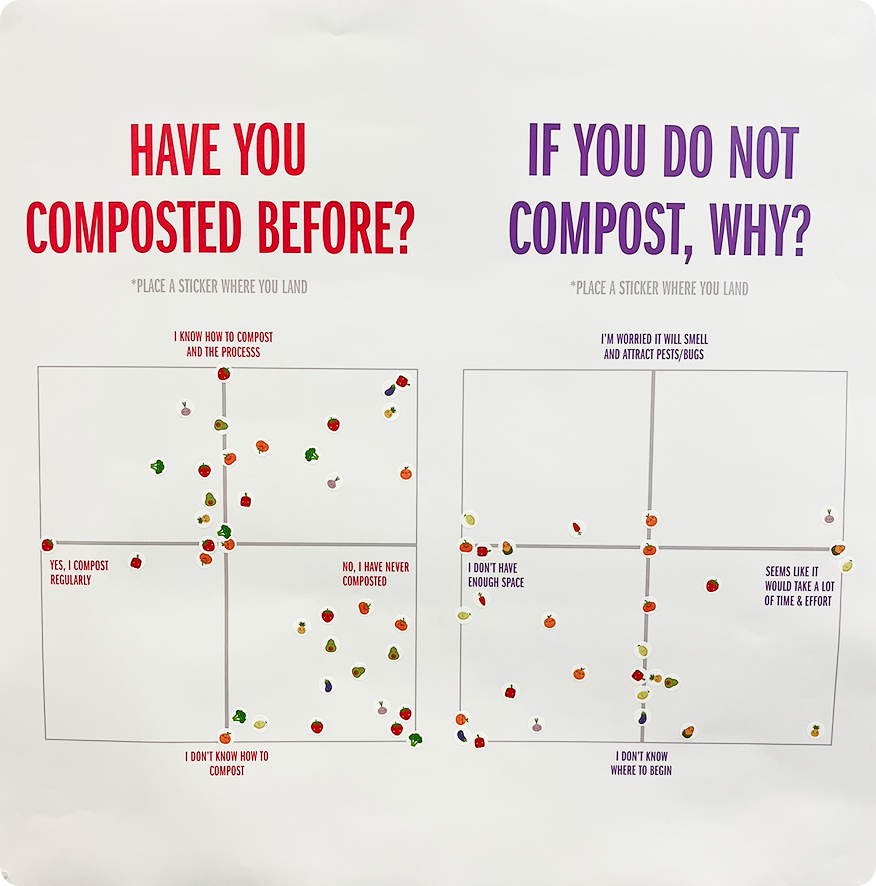
Using surveys that we set up for our peers, we found the biggest reasons why people do not compost:
Not knowing where to begin, intimidation.
Minimal space in dorms/apartments, no backyard.
Not having the time to consistently compost.
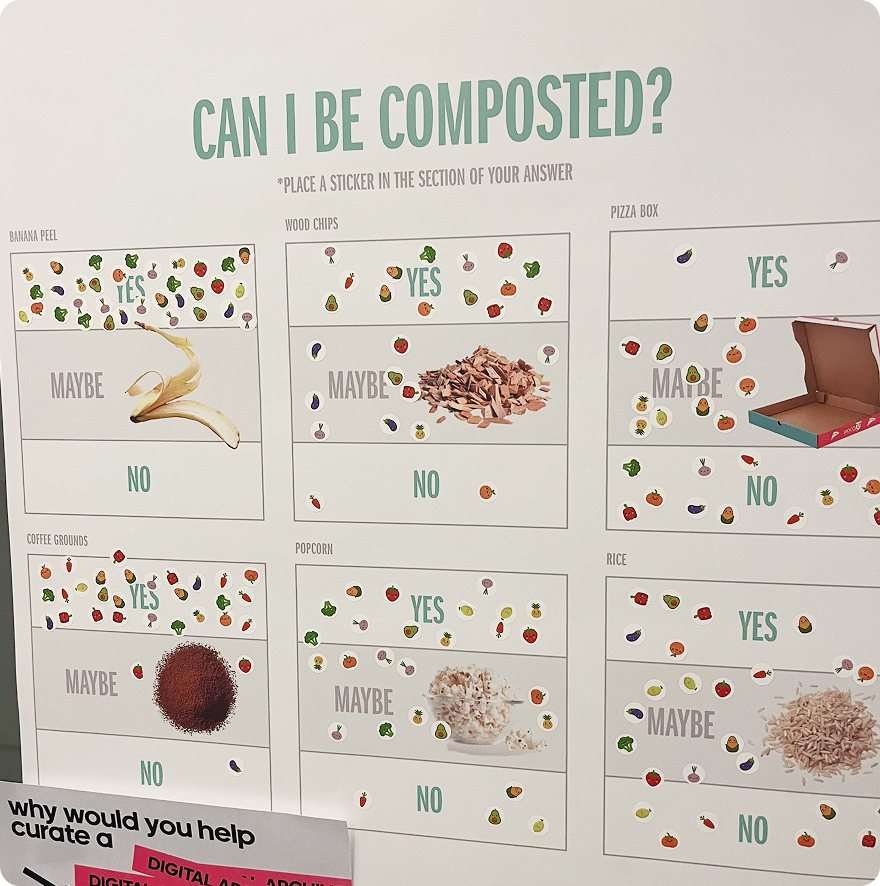
We found out that most students have not composted, and their familiarity with composting from ranges from very little knowledge to knowing the basics.
→ People need beginner-friendly education about composting.
“How might we design a print that will simplify the composting process for beginners?”
We should…
Communicate the benefits and impact of composting
Create short steps for people to follow
Clarify different types of composting (bin vs pile)
Parallel Prototypes & Testing
We tested out a variety of low-fidelity prototypes with our classmates to determine the best way to communicate the benefits and impact of composting.
What we learned:
People responded better to a horizontal layout.
Chunks of information makes it easier for viewers to understand something unfamiliar to them.
Queen City Commons needs to be put more on the forefront of our design approach.
Continue narrowing down the most relevant information for our beginner-friendly guide.
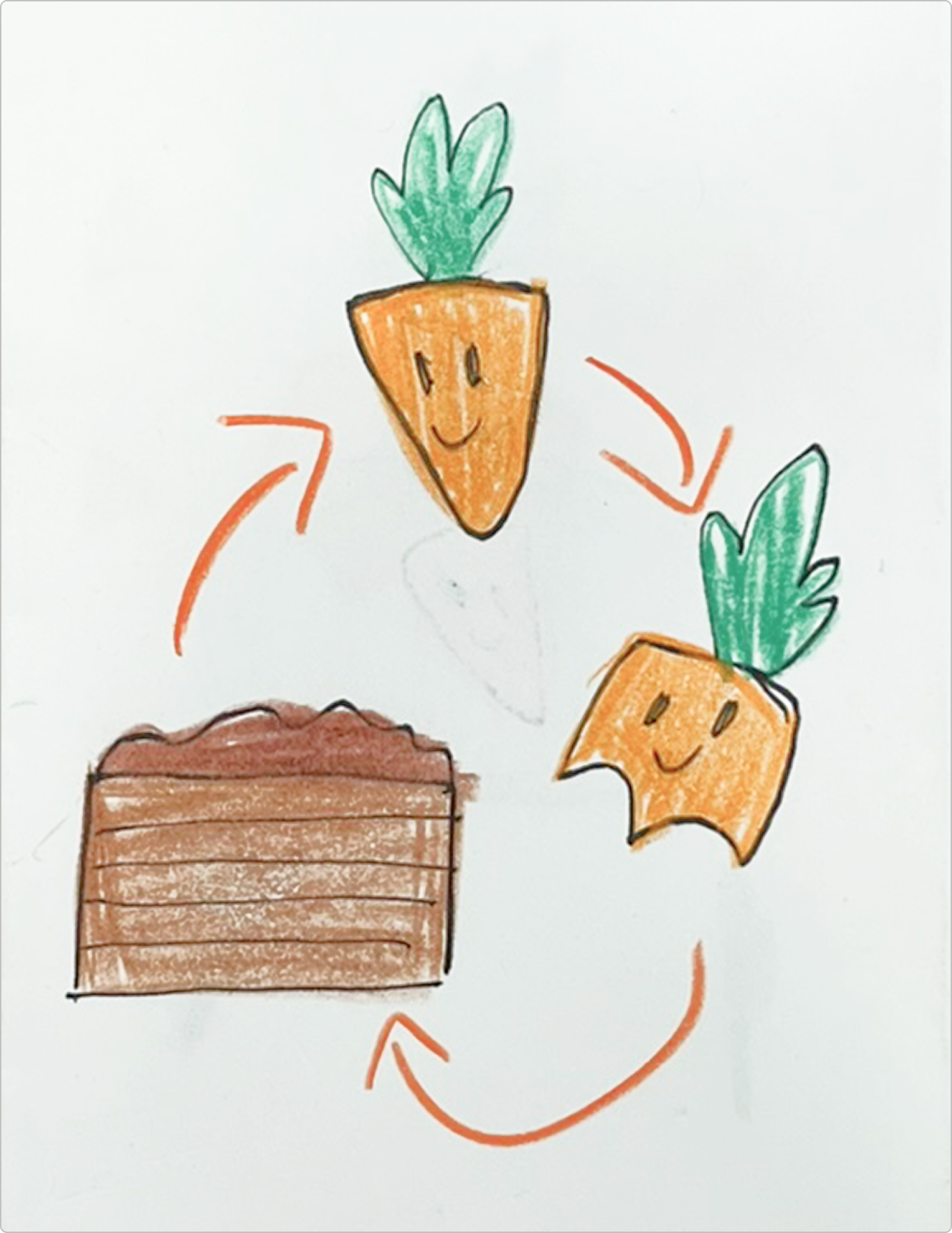
Zine illustrating composting process
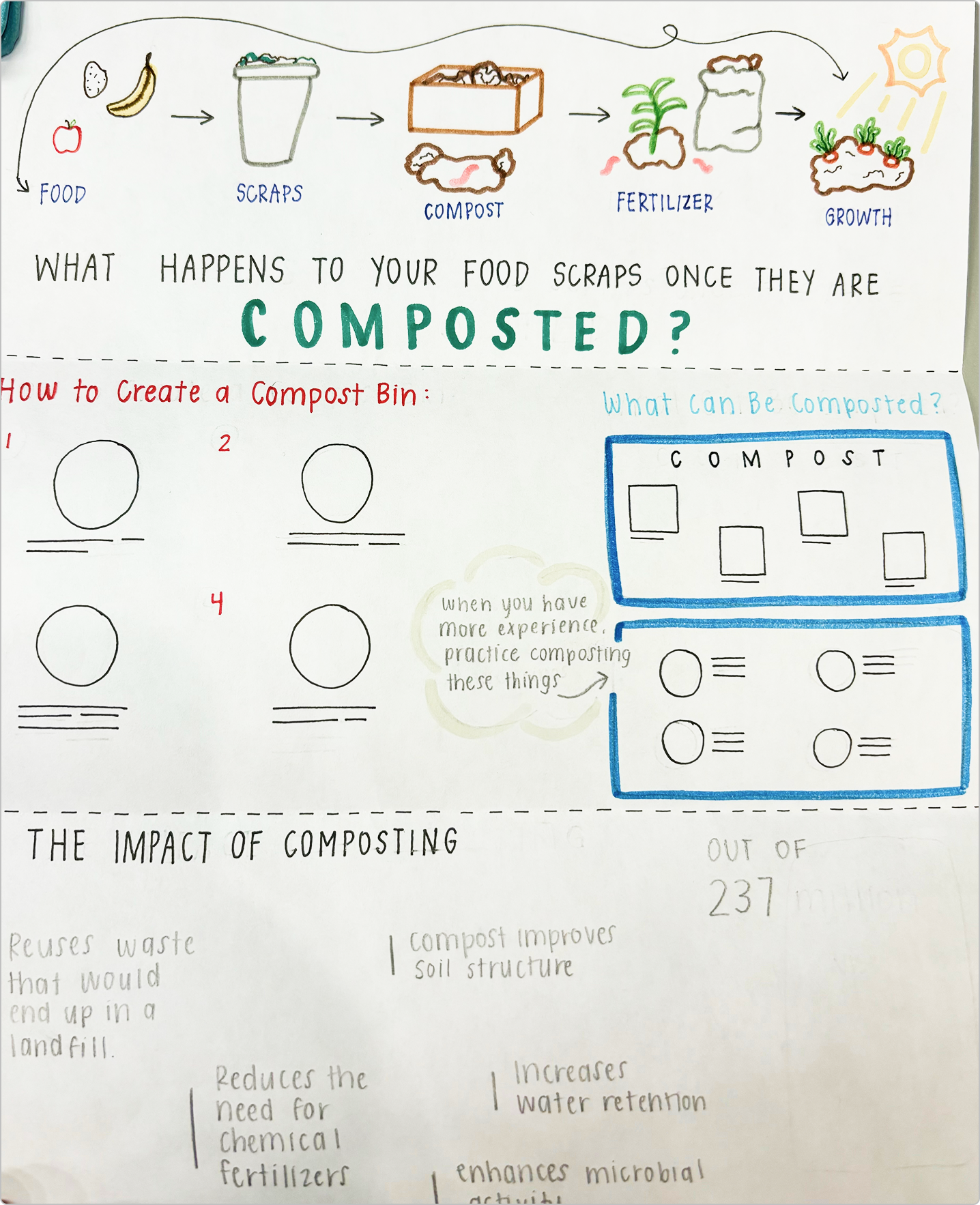
Vertical foldable infographic
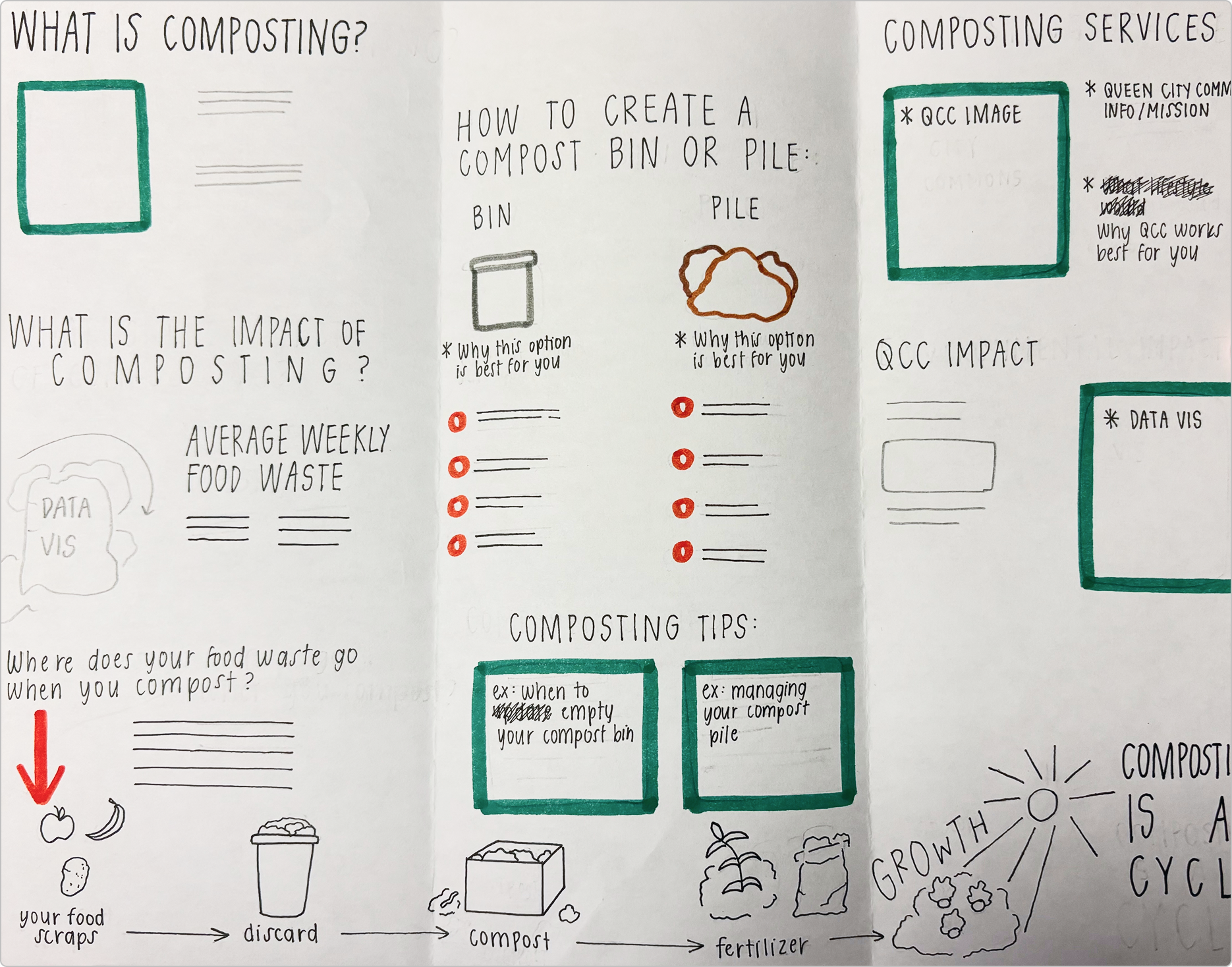
Horizontal foldable infographic
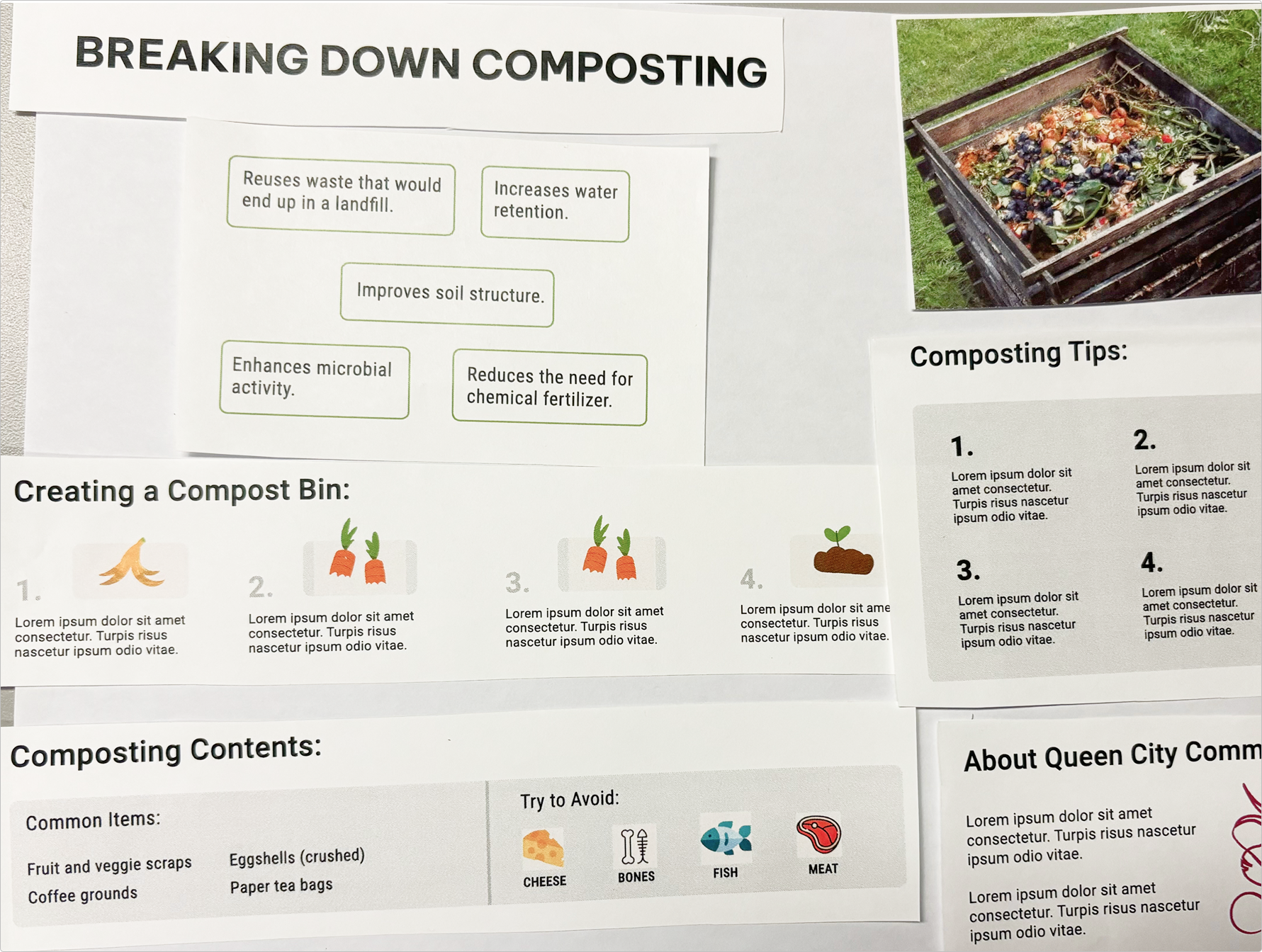
Infographic created by testers
Product Testing
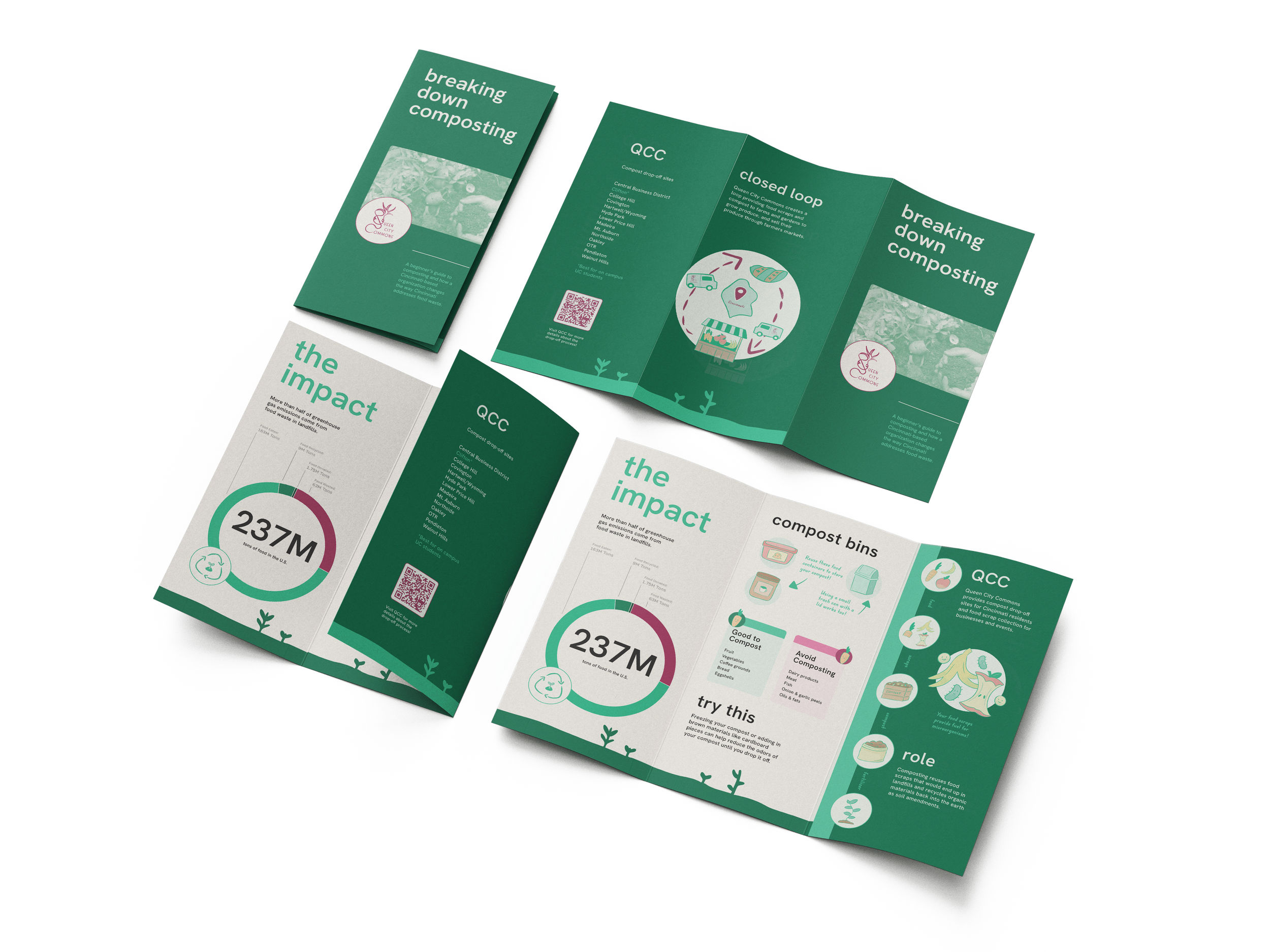
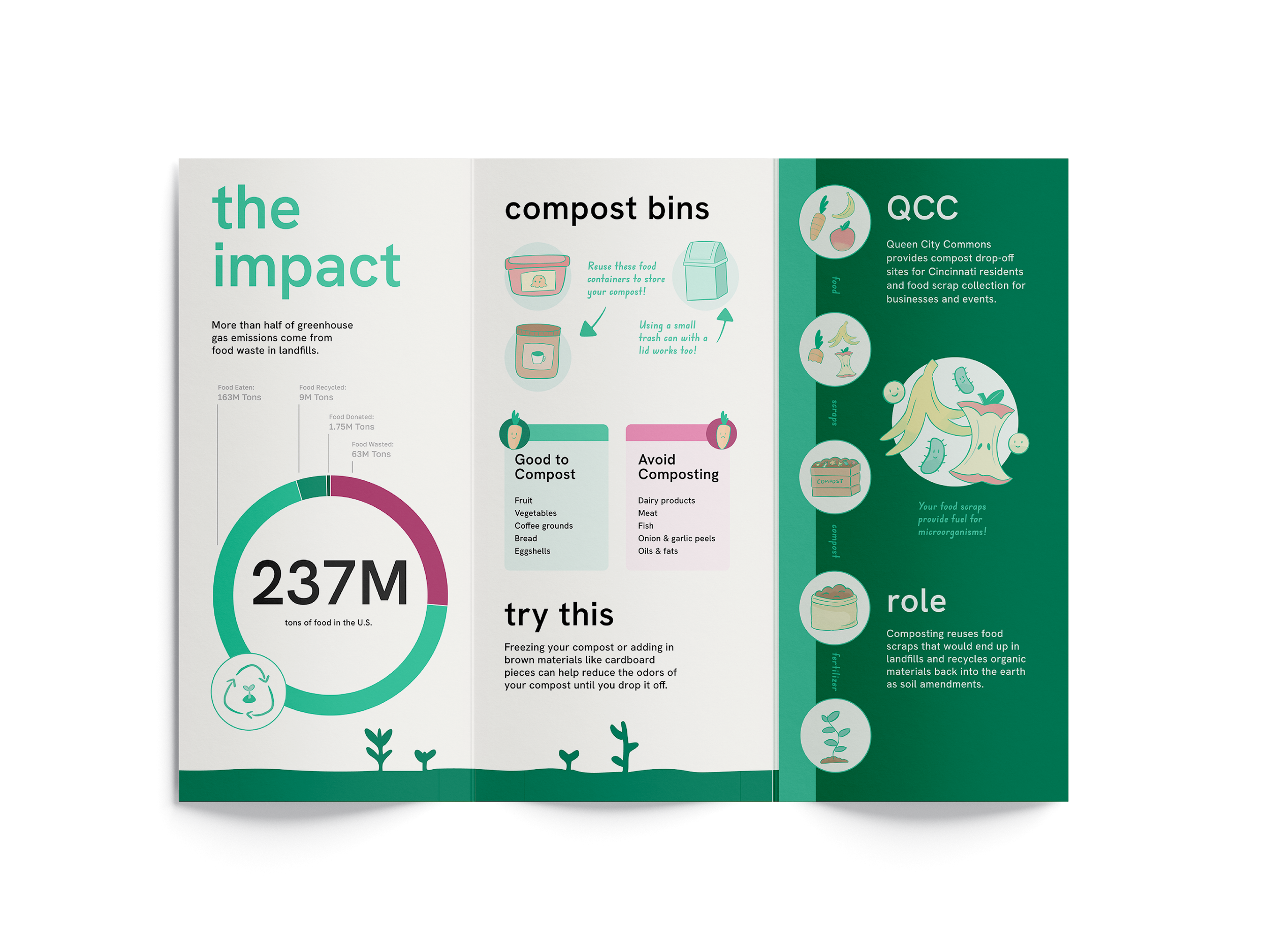
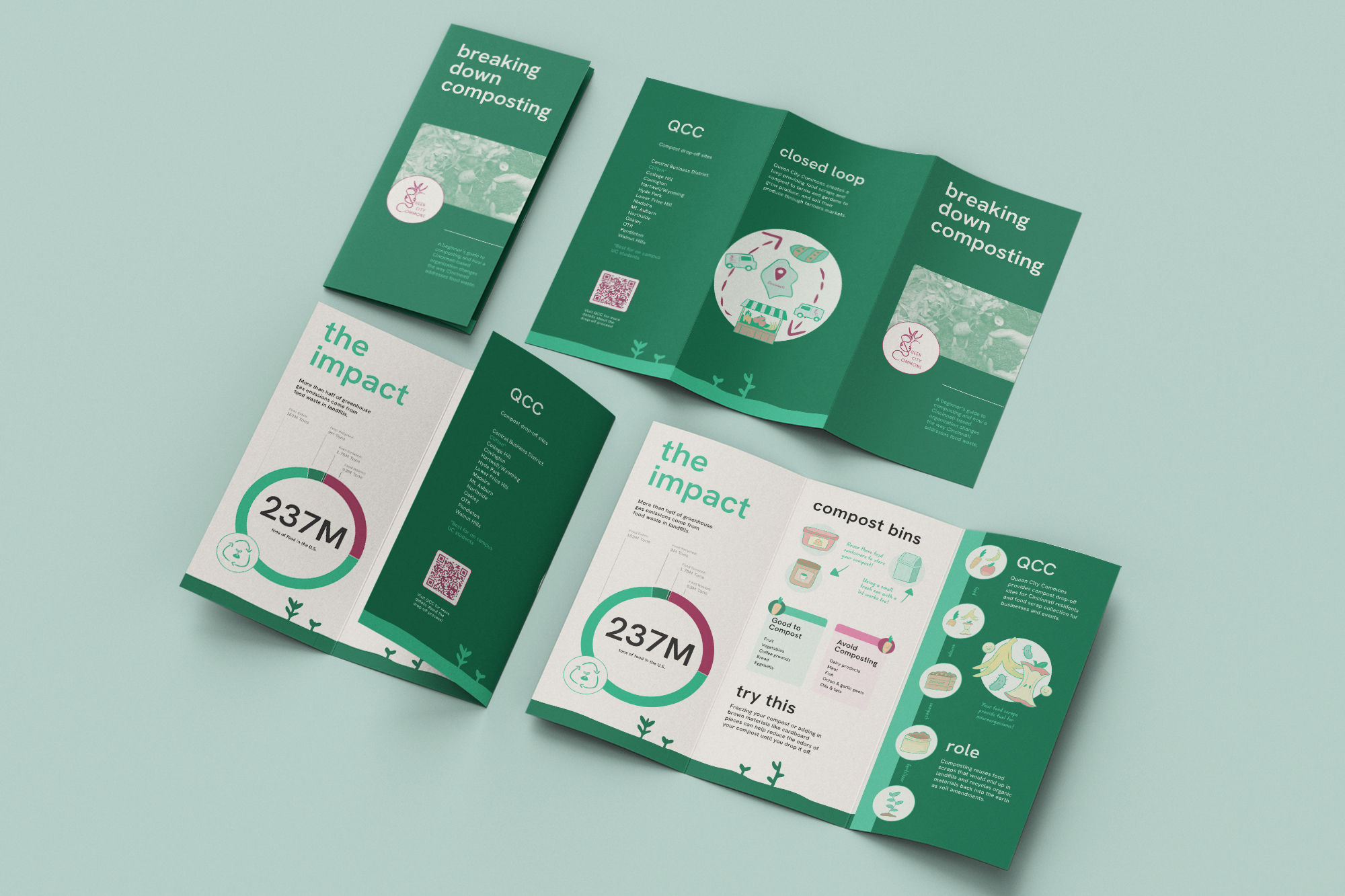
We decided to go for an 11” x 8.5” brochure/foldable infographic that includes beginner-friendly information about composting and an overview of Queen City Commons, a composting organization local to our Cincinnati audience.
Strengths from first iteration:
Horizontal layout flows well.
Helpful callouts.
Content is digestible.
Improvements:
Headlines could be larger.
Include more handwritten type - works well with illustrations and feels familiar.
More cohesiveness of illustrations and images.
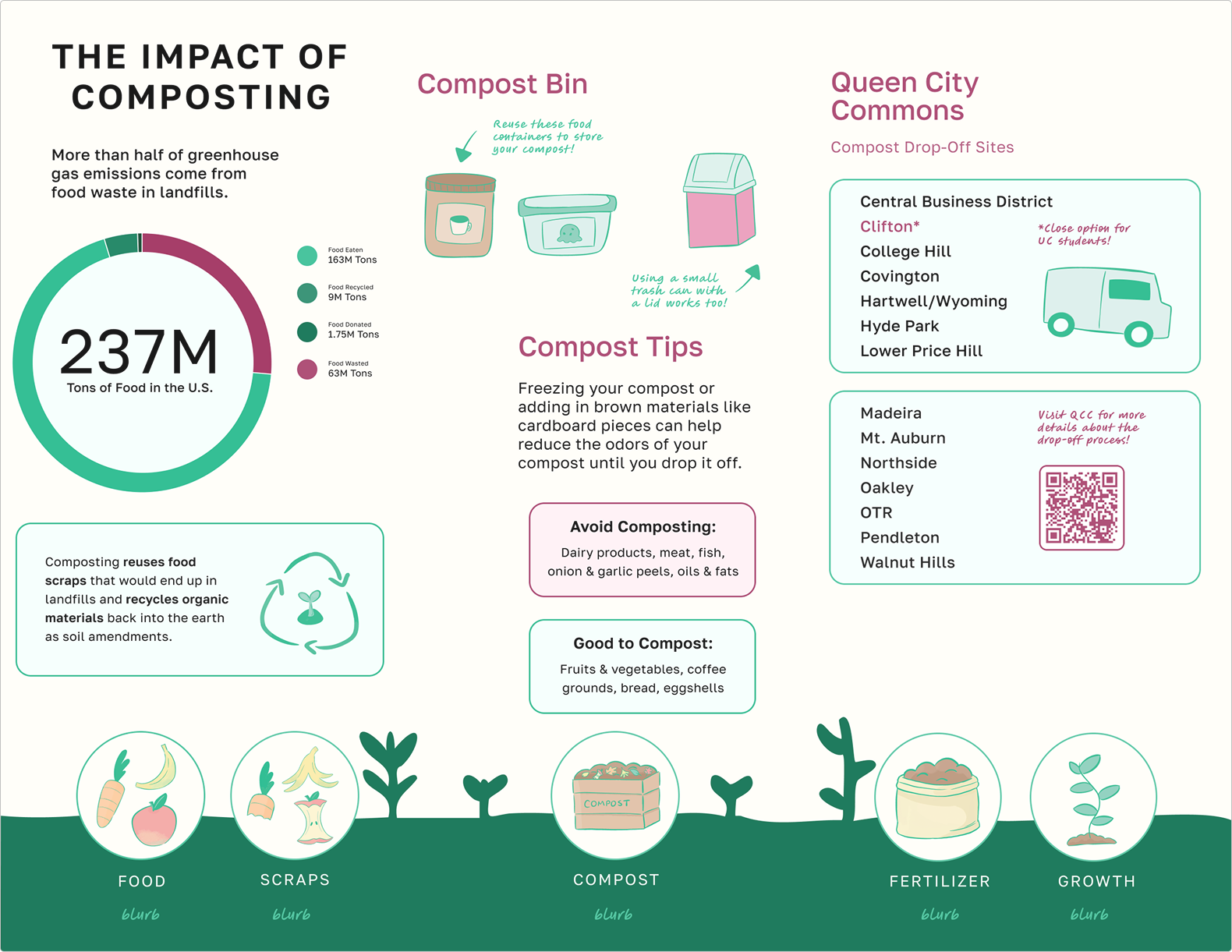
Inside Design
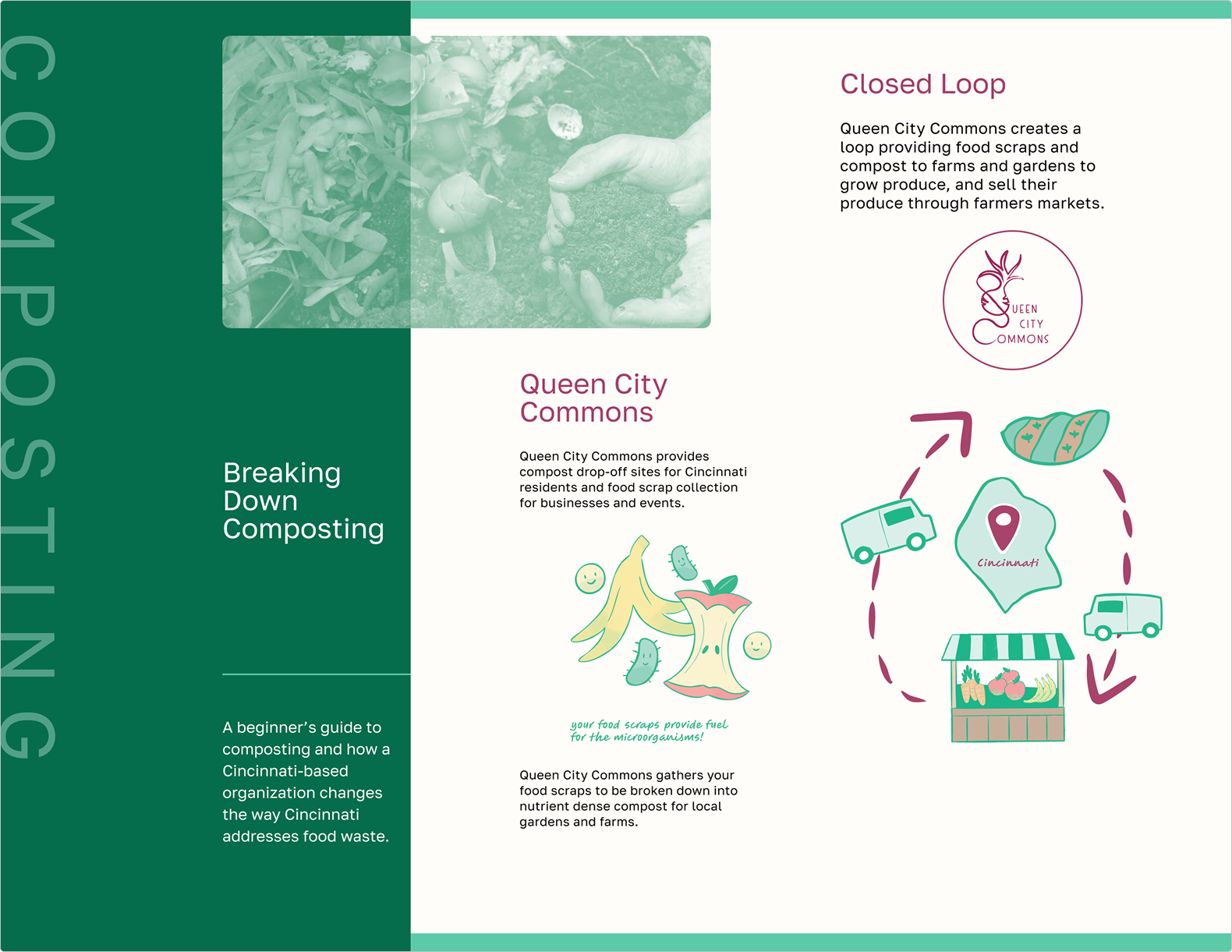
Outside Design
Final Design
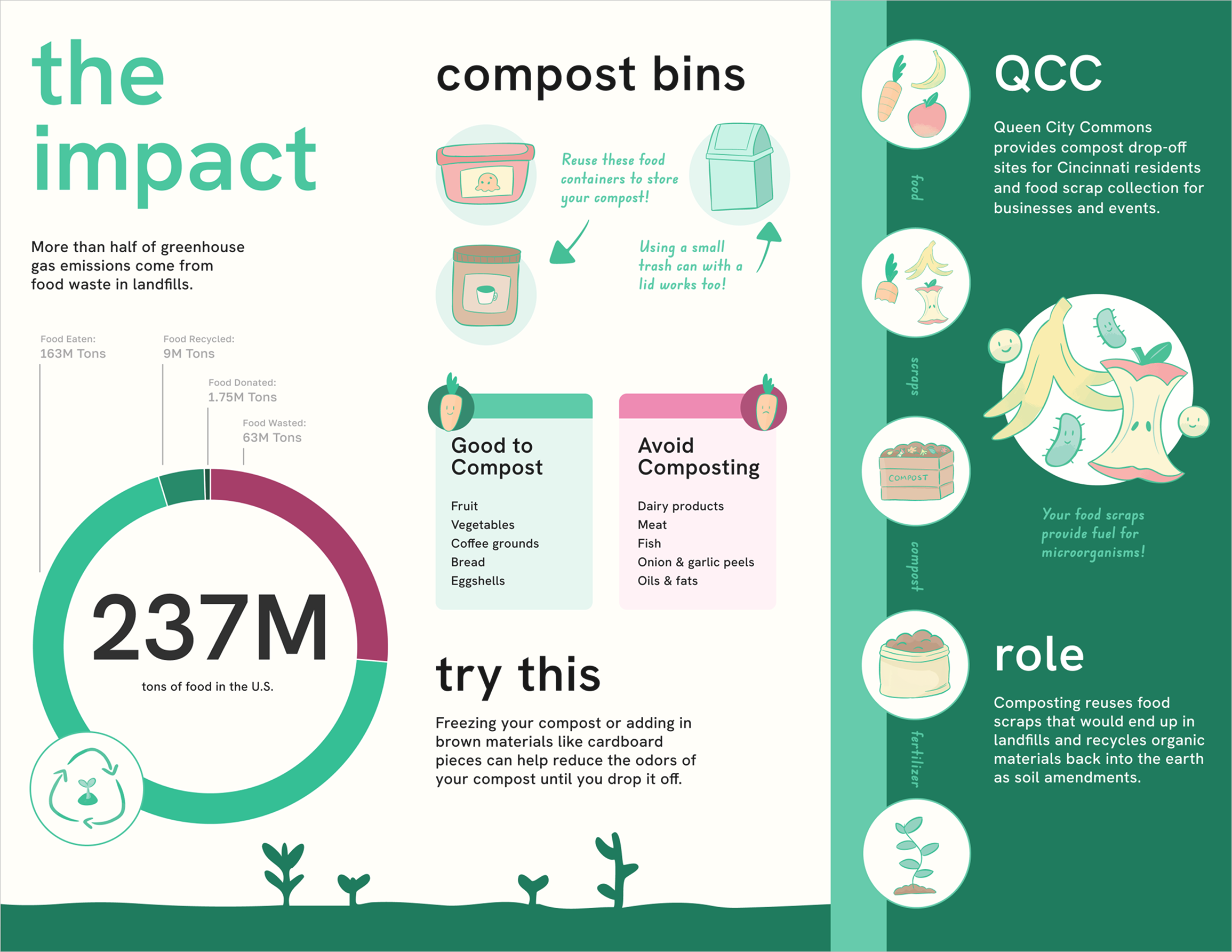
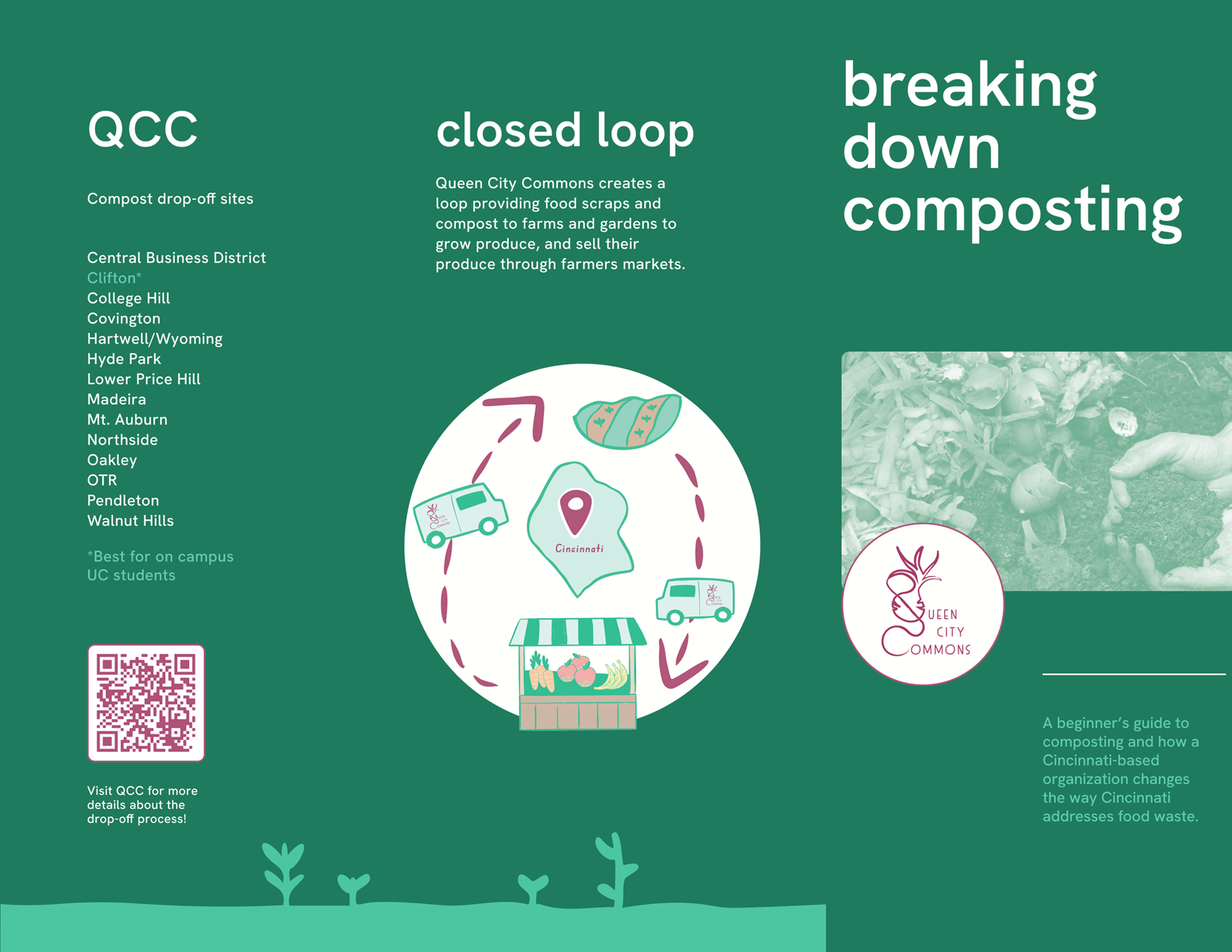
Digestible
chunking of relevant information, use of negative space to break up image and text
Educational Tone
beginner-friendly and approachable (simple typefaces)
Provokes Interest
visuals that viewers can relate to through storytelling